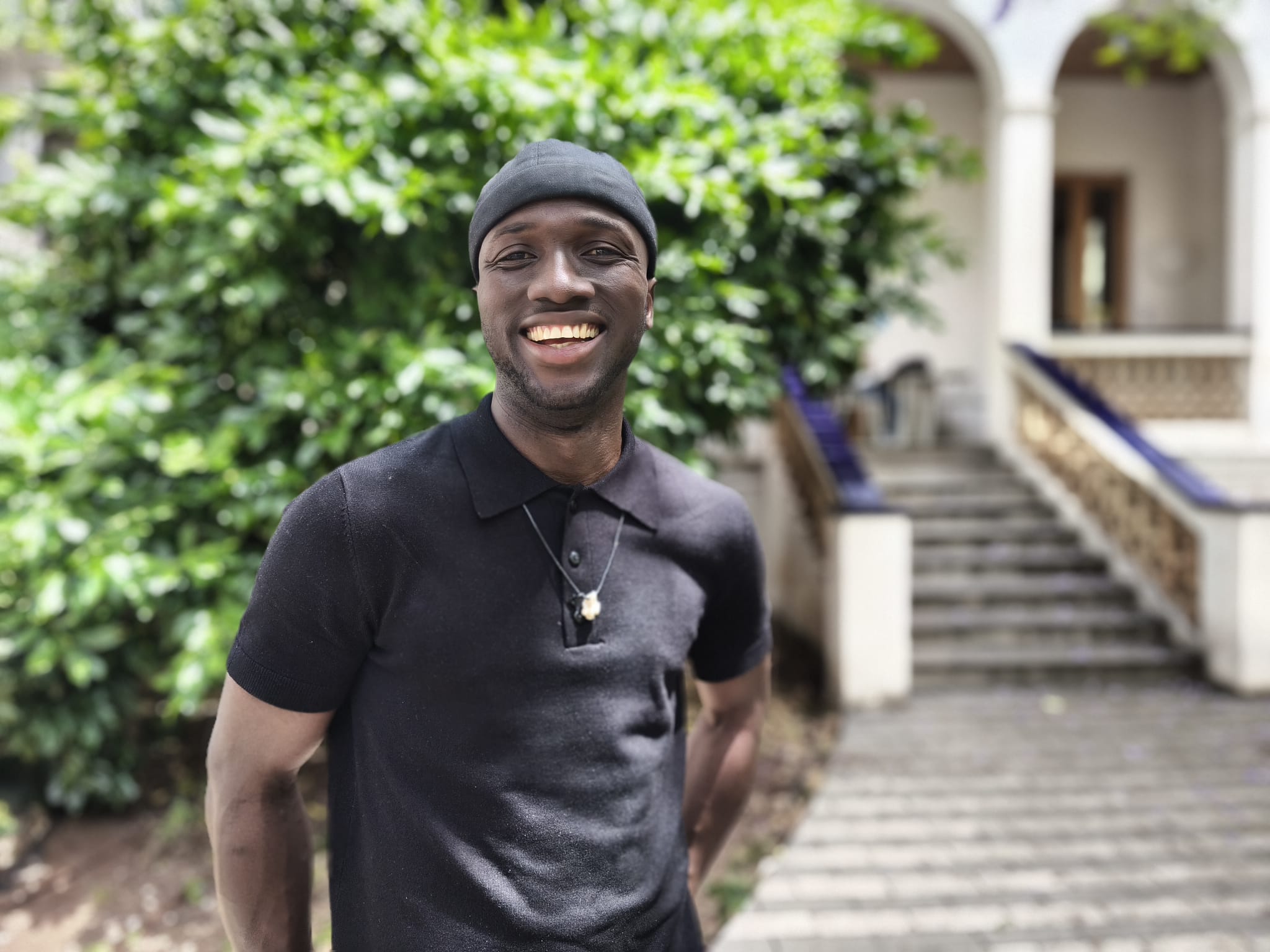
“We all need someone who believes in us”
Bangu arrived in Spain at the age of 17 after embarking on a migration journey that began in Guinea Conakry. He crossed the Mediterranean in a small boat, spent time in different reception centers, and eventually arrived in Barcelona while he was still a minor. During that time, he faced extremely difficult circumstances: he spent nights sleeping on the streets, lived with the uncertainty of not knowing what would happen the next day, and had to build a new life in an unfamiliar country, far from his family.
Today, eight years later, Bangu is the author of Nkelidé (Where I Come From). He supports young people who are in situations similar to the one he experienced and leads initiatives to challenge prejudice and raise awareness of the stories behind migration.
His journey is also an example of the impact that opportunities—and the people who choose to get involved—can have. In 2021, he took part in Fundación Exit’s Coach Project, where he met José Rafoso, a volunteer from Penguin Random House. What began as a career guidance experience became a relationship built on trust that has played a key role in both his personal and professional development.
We spoke with Bangu about his story, the lessons he has carried with him since leaving Guinea, the importance of role models, and the role companies can play when they invest in young talent.
- You have written a book, Nkelidé (Where I Come From), in which you tell the story of a journey full of challenges, but also courageous decisions. Why did you decide to tell your story?
Mainly because I needed to. I had been through so many experiences that I never imagined I would live through, and I felt I needed to make sense of them. Writing became a way of organizing everything I was carrying inside and looking back with a different perspective.
I also wanted to tell my story in my own voice. Too often, people talk about young migrants without really knowing who they are. They speak about them in broad terms, as if everyone shared the same reality. I wanted to explain who I am, what I have lived through, and how I got here.
- In the book, you speak very fondly about your parents. What lesson from them still guides you today?
Everything. The values and upbringing my parents gave me have helped me become the person I am today.
My father always insisted that I should never forget my roots. He taught me to respect others, to act with honesty, and to stay true to my principles. When I arrived in Spain, I encountered situations that were very different from anything I had known before, but I always tried to hold on to those values.
That is also why I try to tell other young people that where you come from does not determine what you are capable of building. Values are a powerful tool for facing any challenge.
- You took part in Fundación Exit’s Coach Project. What do you remember most about that experience?
I remember it as a great opportunity. It came at a very important moment in my life.
I wanted to continue studying and developing my skills. At the same time, I needed to renew my legal documentation and was facing many obstacles in accessing the job market.
Thanks to the Coach Project, I was able to step into the corporate world for the first time, understand how organizations work, and discover professional environments that had previously been completely unfamiliar to me.
Looking back, I can honestly say that experience had an enormous impact on my life. Many of the things that came afterward began there.
- During the project, you met José Rafoso, a professional at Penguin Random House and your coach. What did he mean to you?
I was incredibly fortunate that our paths crossed. Not only did he help change my situation, but he also became my mentor. I was very grateful for the opportunity to get to know a company like Penguin Random House and to understand how the professional world works.
José always believed in me. Whenever I thanked him, he would say, “Don’t thank me. You earned it.” That stayed with me.
In fact, when I finished writing my book, he was one of the very first people I showed it to. Our relationship continues to this day. He supports me, advises me, and helps me whenever I have doubts.
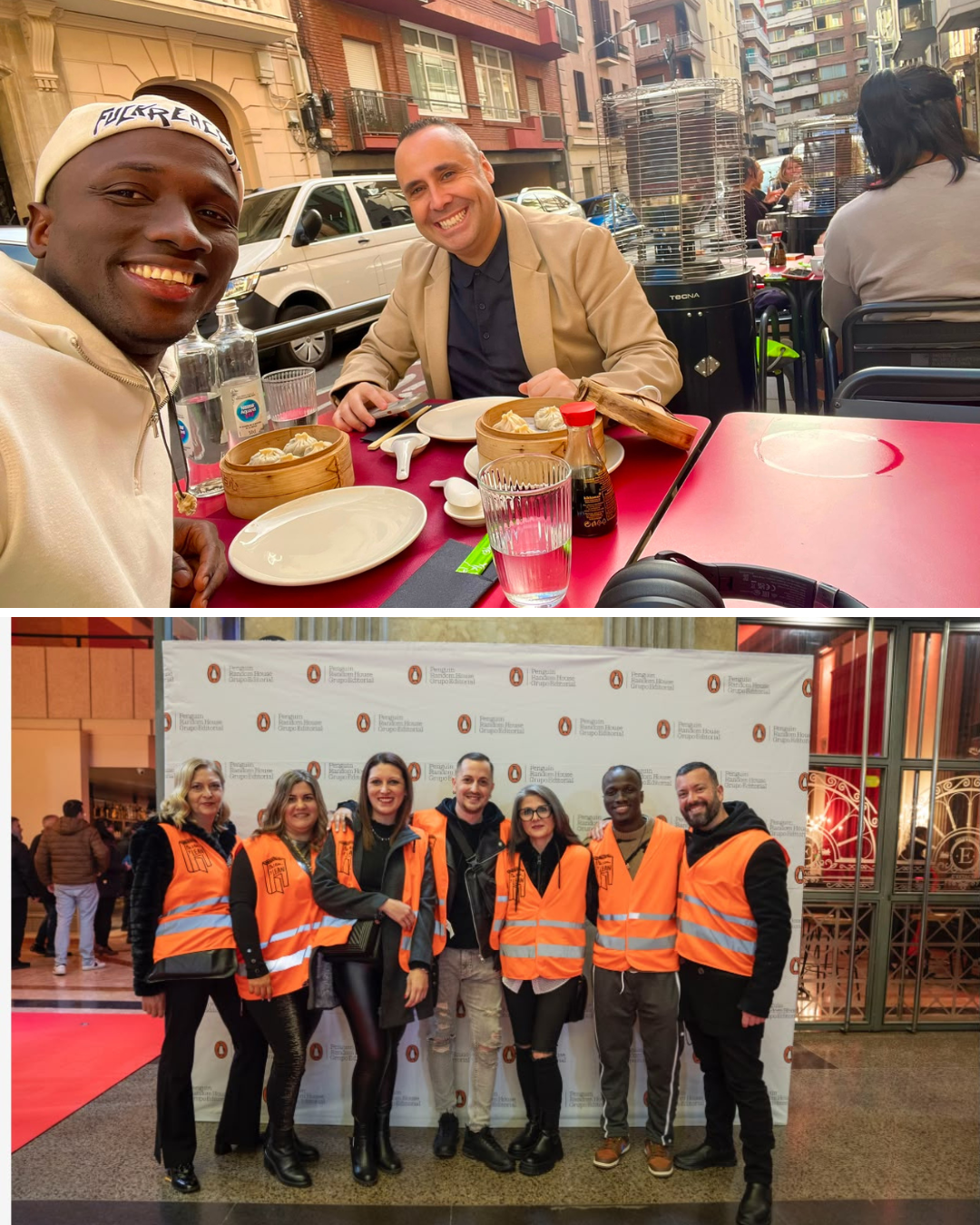
In the first photo, Bangu and José Ramón, his coach in Fundación Exit’s Coach Project, in the second, Bangu during his time at Penguin Random House.
- What does it mean for a young person to find someone who believes in them and supports them along the way?
It means a great deal. We all need someone who believes in us and offers guidance.
Young people often have motivation and talent, but they need someone to help them see possibilities that they may not yet be able to see themselves.
That is why I believe it is important not to be afraid to ask for help, ask questions, or learn from people with more experience. I still do it every day.
- Young migrants are often defined by the challenges they face. What potential do you think society is failing to see?
Behind every person, there is a story. Too often, people only talk about numbers or headlines. But behind every individual there are experiences, dreams, families, and personal journeys.
People who migrate arrive with aspirations, skills, and a desire to contribute. In many cases, all they need is someone willing to listen to them and give them the opportunity to show what they can do.
- You dedicate part of your time to challenging prejudice and giving visibility to different realities. Why is that important to you?
Because I believe it is the only way to create real change.
It is very easy to form an opinion about someone when you do not really know them. Most prejudice comes from that lack of contact.
I always say that before judging someone, it is worth listening to them. Learn about their story, talk to them, and understand the path they have taken.
We all know people whose backgrounds are different from our own. Getting to know them and listening to their experiences is one of the best ways to break down prejudice.
- What would you say to a young person who feels that circumstances are against them?
I would tell them not to lose hope. There will be difficult moments—times when everything feels like an uphill battle and it is hard to imagine things getting better. But today’s situation does not have to be tomorrow’s.
At the same time, believing that things will change does not mean waiting for them to happen. You have to keep moving, keep learning, meet new people, make the most of every opportunity, and continue moving forward, even when progress feels slow.
I always say that if I am where I am today, it is because I made the most of the opportunities that came my way.
So my message to every young person is this: keep going. Believe in yourself. And never stop learning.